
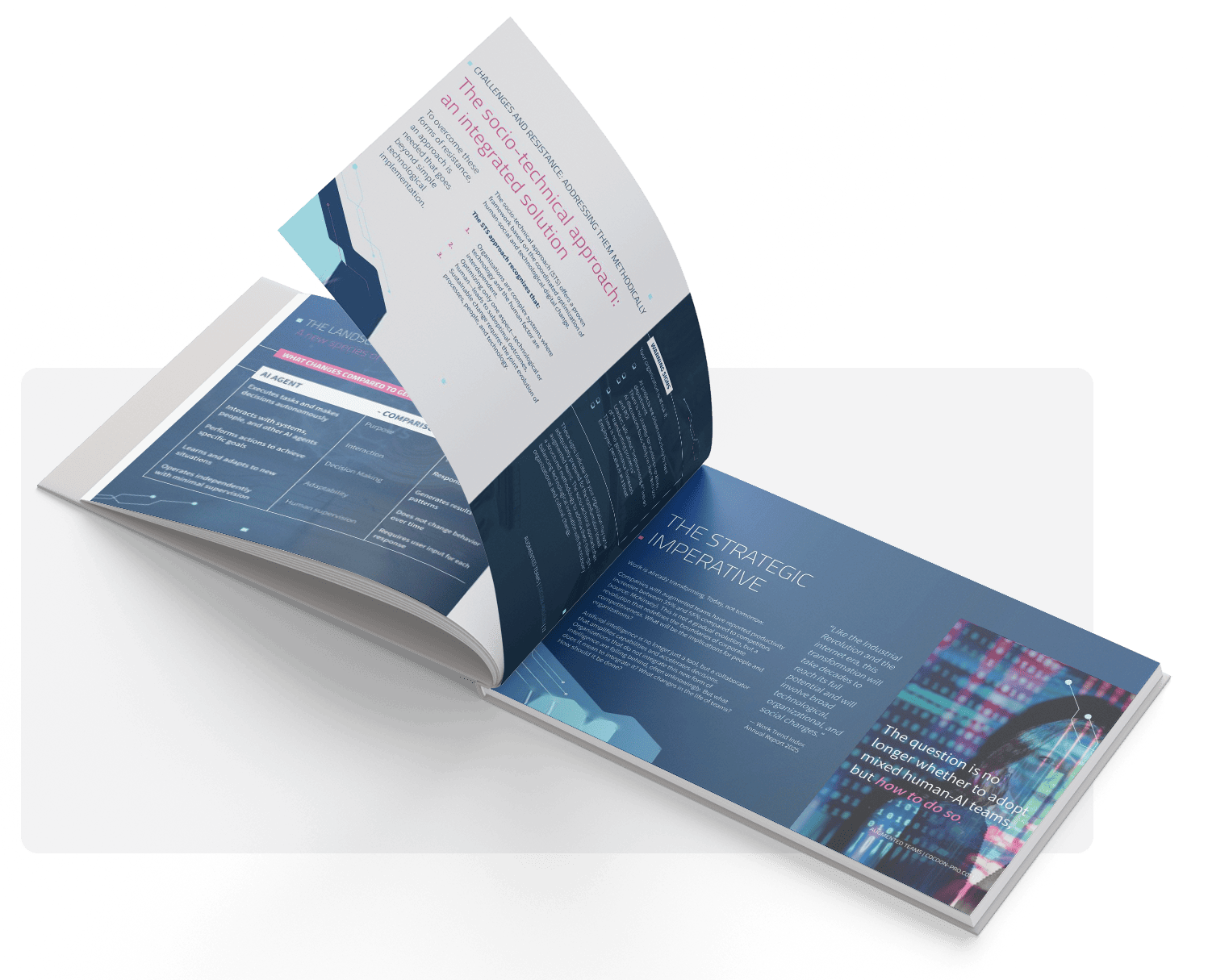

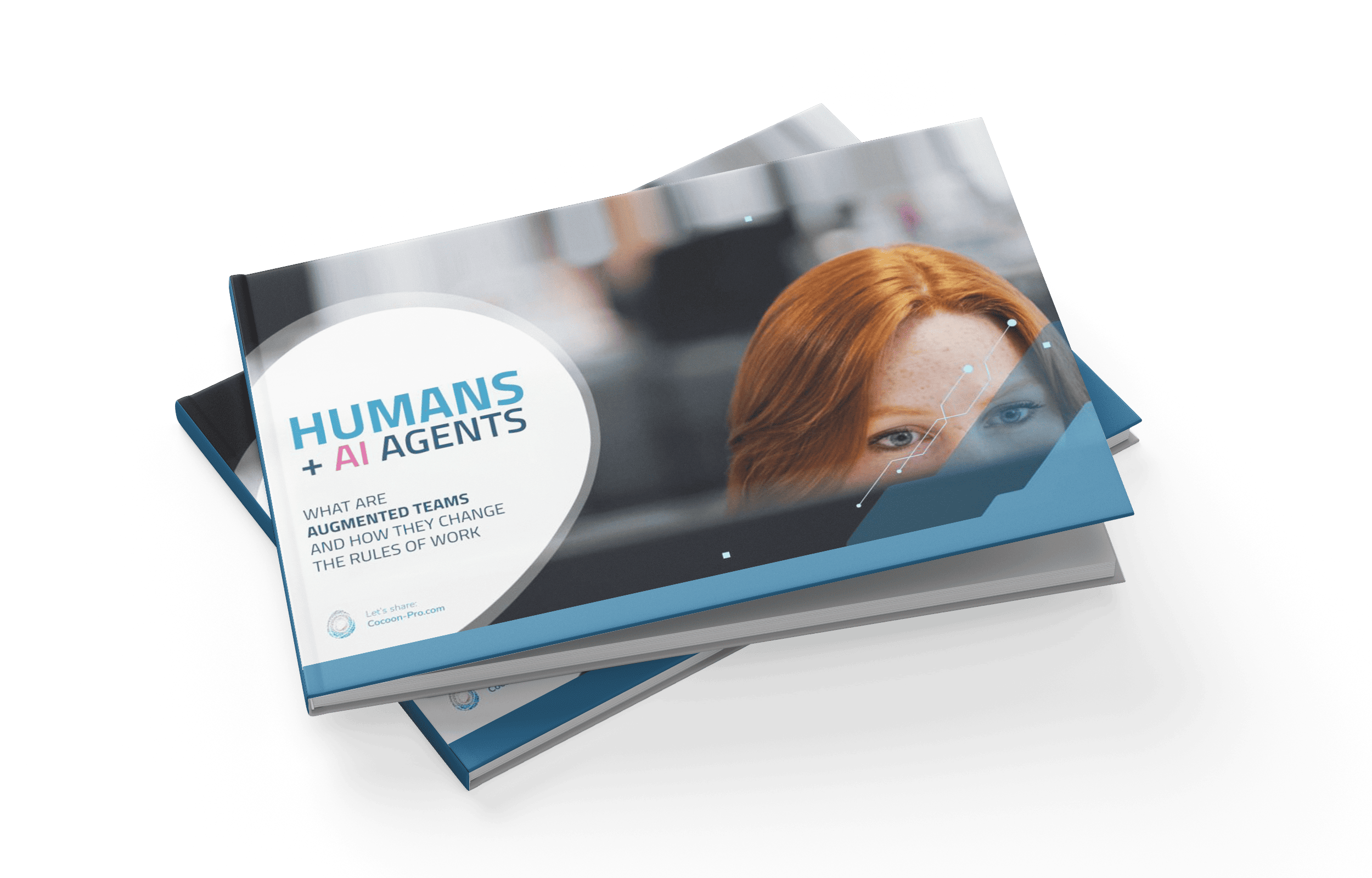
REPORT
Humans
+ AI Agents
The organizational landscape is undergoing a profound transformation. The integration of AI Agents into work teams is no longer a futuristic vision, but a reality that is reshaping productivity and competitiveness.
What do we need to know to lead our organizations into this new era?
“Today, the real issue is not a new technology, but a new way of collaboration between humans and software capable of deciding, learning, and acting autonomously: artificial intelligence agents. The question is no longer whether to adopt human-AI mixed teams, but how."
“Oggi la posta in gioco non è una nuova tecnologia, ma un nuovo modo di collaborazione fra esseri umani e software capaci di decidere, imparare e agire in autonomia: gli agenti di intelligenza artificiale. La domanda non è più se adottare team misti umani-IA, ma come."
The contemporary context is marked by rapid technological evolution that is redefining organizational dynamics.
The integration of AI Agents into work teams represents a strategic frontier — no longer just an innovation, but a key factor for productivity and competitive capability.
This document is designed to support leaders in navigating this transformation.
The Key Issues for Business Decision-Makers
The adoption of agentic Artificial Intelligence in organizational contexts raises complex questions and requires a deep understanding of its implications.
Leaders are faced with:

Perception of Agentic AI: The tendency to view agentic AI as a mere digital tool, underestimating its transformative potential on organizational architecture and decision-making processes.
Utility and Reliability Assessment: The need to discern the actual usefulness and reliability of AI agents in complex operational scenarios, in order to justify investments and mitigate risks.
Governance and Accountability Management: The challenges of defining robust governance frameworks for data protection, privacy, and the assignment of responsibility in AI-mediated operations.
Integration Strategy Development: The complexity of formulating clear strategies for redefining roles, optimizing workflows, and implementing appropriate performance metrics for human-AI hybrid teams.
Organizational Culture and Change: Managing internal resistance and fostering a culture that views AI as a catalyst for amplifying human capabilities, rather than as a substitute.
“What happens to a team’s performance when some of its members are AI Agents?"
This is an increasingly important question for the near future.
An Essential Guide for Transformation
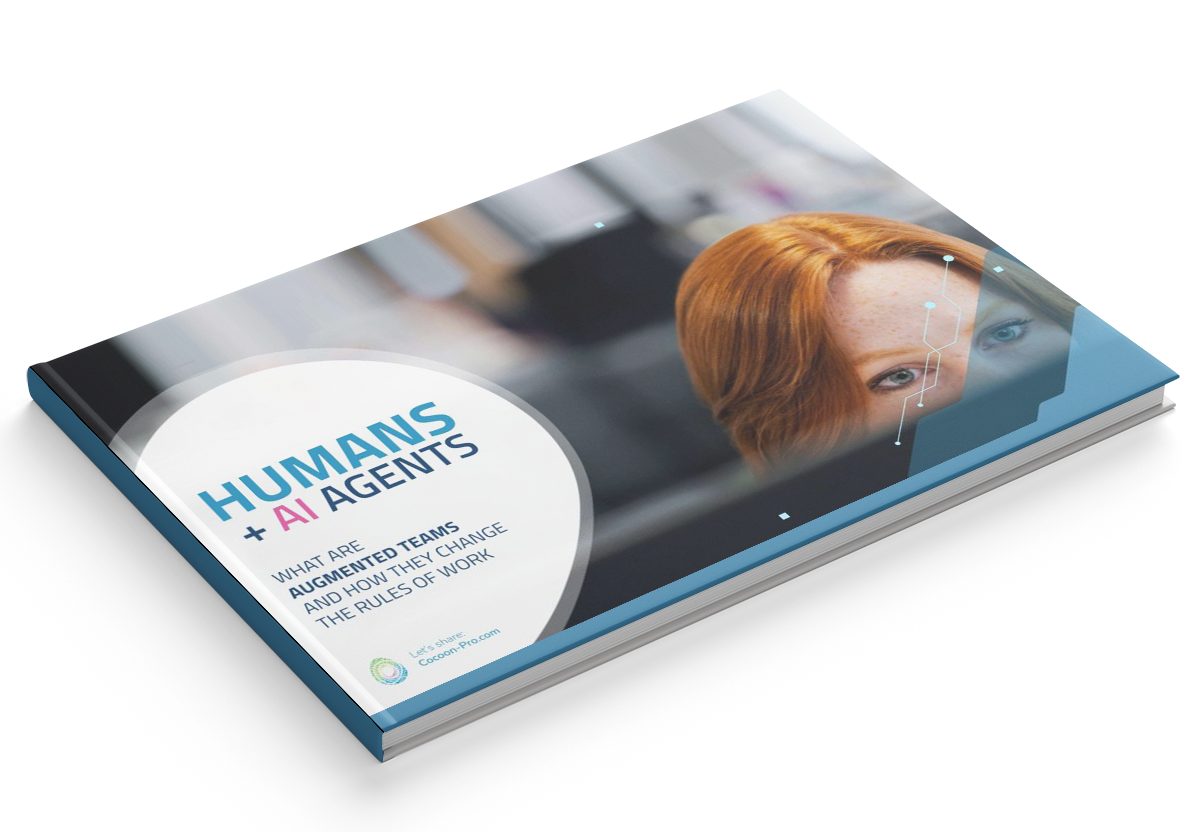
Our report, “Humans + AI Agents: What Augmented Teams Are and How the Rules of Work Are Changing”, has been written to provide a comprehensive, evidence-based perspective on this evolution.

Inside, you will find:
How to Address the Strategic Imperative Without Fear: An analysis of why adopting human-AI hybrid teams has become an unavoidable component of corporate strategy, supported by concrete data on productivity gains (ranging from 35% to 55% according to McKinsey).
The Nature of Agentic Intelligence and What It Means for You: A clear distinction between generative AI and agentic AI, illustrating how the latter represents a significant evolution in human-machine collaboration, with autonomous capabilities for decision-making, planning, and adaptation.
The (Hidden) Considerations on the Value of Augmented Teams: An illustration of how the synergy between human capabilities (creativity, ethical judgment) and artificial intelligence (processing speed, data analysis) creates a virtuous cycle of efficiency, effectiveness, and innovation — along with key caveats that must not be overlooked.
The Inescapable Truth About the Economic Implications: Data and projections on AI’s economic impact, including estimated GDP growth and the contribution of generative AI to global GDP.
What (Not) to Do in Redefining Work: An exploration of the new organizational paradigm where professional roles evolve, with humans taking on the role of orchestrators of specialized artificial intelligences.
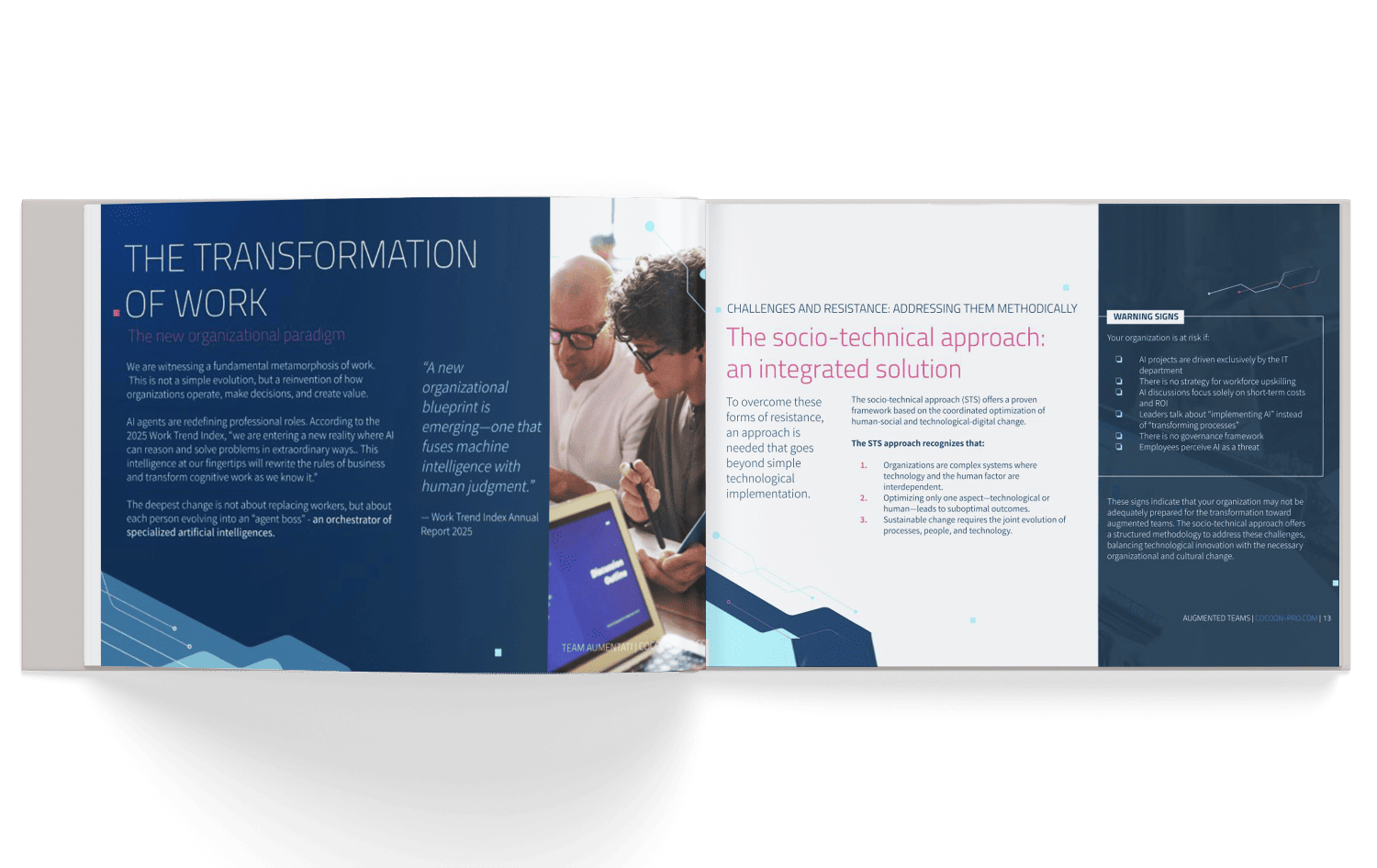
The Socio-Technical Approach to Avoid Implementation Failures: A proven methodological framework to address adoption resistance, balancing technological innovation with the necessary organizational and cultural change, in order to ensure sustainable outcomes and mitigate risks.
Taming Risk with the Implementation Roadmap: A structured four-phase process (Exploration & Pilot, Targeted Expansion, Organizational Transformation, Continuous Evolution) to guide implementation.
"Organizations that treat agentic AI as merely a technological upgrade are making the same mistake that was made with the internet in the 1990s."
A Sustainable Competitive Advantage

Organizations that successfully integrate augmented teams will position themselves for lasting competitive advantage.
Accessing this report will enable you to:
Optimize Productivity: Leverage AI agents’ capabilities to streamline operational processes and redirect people toward higher-value strategic activities.
Elevate Decision Quality: Benefit from in-depth, real-time analysis to make more informed and strategic decisions, reducing uncertainty.
Accelerate Innovation: Foster an environment conducive to generating new ideas and solutions, keeping the organization at the forefront of its industry.
Enhance Human Capital: Create a stimulating work environment that fosters professional development and amplifies both individual and collective skills.
To explore these topics in depth and gain a comprehensive understanding of the implications and opportunities offered by augmented teams, download the report “Humans + AI Agents: What Augmented Teams Are and How They Are Changing the Rules of Work.”
DOWNLOAD THE REPORT
© 2025 - Cocoon Pro s.r.l. All Rights Reserved